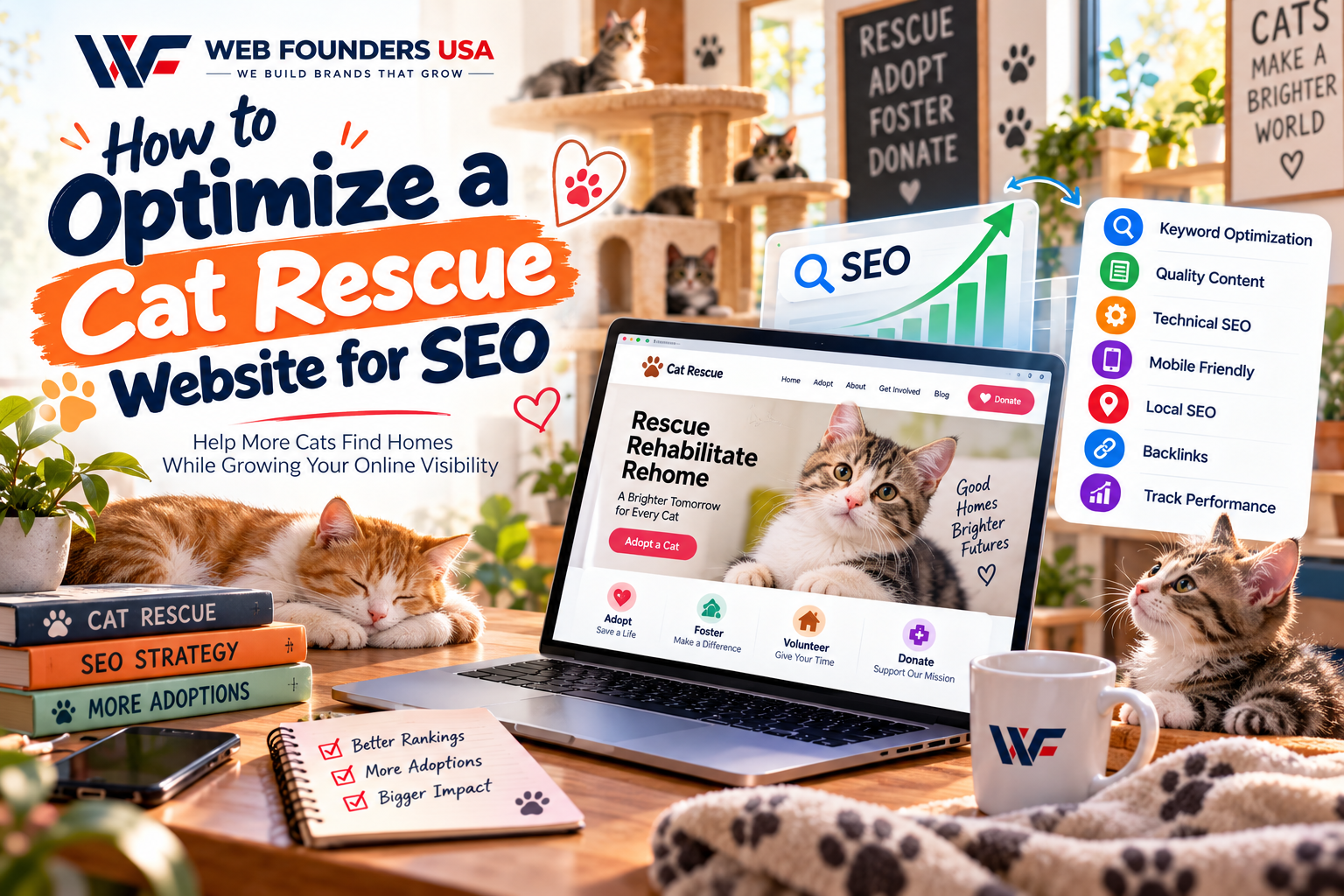
A cat rescue website connects homeless cats with people willing to provide loving homes. However, reaching potential adopters requires more than publishing adoption listings. Search engine optimization (SEO) helps animal shelters increase visibility, attract relevant visitors, and promote successful adoptions.
This guide explains how to optimize a cat rescue website using practical strategies, helpful content, and measurable improvements.
For Relevant Info:
Affordable SEO Pricing, Packages & Cost! What Are You Waiting For?
How to Choose the Best SEO Company in Alexandria, VA
7 Search Engine Optimization Strategies for Businesses in Alexandria, VA
What Is Technical SEO for SaaS Websites?
NAP Consistency: What It Is and Why It Matters for Local SEO
How to Track Calls for Google My Business?
1. Why SEO Matters for Cat Rescue Websites
The use of SEO saves the organizations engaged in animal rescue so that when people search for cat adoption, animal shelters, and fostering options, these organizations are visible. The enhanced visibility could eventually mean that the rescued animals are more likely to connect with the right owners and communities.
An optimized site is beneficial for organizations as follows:
- It brings relevant organic traffic to the site.
- It introduces available cats and kittens.
- It encourages people to become foster volunteers and donors.
- It helps bring attention to the responsible pet ownership ideas.
- It raises awareness about local rescue organizations.
- For instance, if someone wants to find a cat adoption center, he or she will easily find available cats, requirements for adoption, and where to contact.
2. Cat Rescue Keyword Research
Keyword research identifies the phrases potential adopters use when searching online. Selecting relevant keywords helps your website match their needs and search intent.
|
Primary Keyword |
Related Keywords |
Search Intent |
|
Cat rescue near me |
Local cat shelter, cat rescue center | Local |
|
Adopt a cat |
Cat adoption process, adoption requirements |
Transactional |
|
Kitten adoption |
Adopt a kitten, kitten rescue |
Transactional |
|
Cat fostering |
Foster a rescue cat, foster application |
Informational |
| Cat care tips | Rescue cat care, new cat checklist |
Informational |
Leverage the tools, Google Keyword Planner and Google Search Console, for opportunity identification and tracking of the search performance as follows:
Practical Steps:
- Delegate one main keyword to a significant web page.
- Use naturally relevant keywords in headings and contents.
- Use place-dependent keywords where necessary.
- Avoid repetition or overly stuffed keywords.
- Revise webpages in relation to the search performance.
3. On-Page and Entity-Based SEO
On-page SEO is focused on the optimization of respective pages of the websites, and entity-based SEO refers to how the search engines understand the connections between entities like institutions, products, and topics.
The relevant entities for a cat rescue website can be: animal shelters, vet clinics, pet adoption issues, foster care, humane care of animals including vaccination, and responsible pet ownership.
Make the separate pages about:
- Registered cats and kittens available.
- Requirements and steps for cat adoption.
- The foster care application.
- The veterinary services related to cat health.
- The donation and volunteer services.
- The respective pages should contain a thorough title tag, headings that are useful, meta description that refers to the topic and clear call to action.
This is how the page about the adoption should be designed: the qualifications, fees, veterinarian information and details about the procedure of getting adopted cats forever should be written on the web page.
4. Local SEO for Animal Shelters
Local SEO helps people discover rescue organizations serving their communities. Start by optimizing your Google Business Profile if your organization is eligible.
|
Local SEO Task |
Recommended Action |
|
Business details |
Maintain accurate contact information and hours |
|
Location pages |
Describe genuine service areas |
|
Photographs |
Upload authentic rescue and facility photos |
|
Reviews |
Encourage honest feedback from adopters |
|
Directories |
Keep organization details consistent |
|
Contact information |
Make phone, email, and location easy to find |
Avoid creating misleading location pages for places your organization does not serve.
5. Building Trust With E-E-A-T
E-E-A-T represents Experience, Expertise, Authoritativeness, and Trustworthiness. This term serves as a guide to creating helpful information on reliable websites.
Establishing trust means providing authentic information about cat rescue experiences and clear knowledge of the organization.
E-E-A-T can involve actions like:
- Publishing real cat rescue or adoption stories.
- Including biographical materials about the authors and their qualifications.
- Having qualified professionals review articles on veterinary issues.
- Quoting trustworthy sources for discussing animal health and safety.
- Providing clear explanations of donation practices.
6. Internal Linking, AEO, and GEO
Internal links connect related pages and help visitors discover relevant information. They also help search engines understand your website’s structure.
Use descriptive anchor text such as:
- Cat adoption process
- Kitten fostering guide
- Essential cat care tips
- Available rescue cats
- How to support animal shelters
For example, an article about preparing for a new pet can link directly to your adoption page.
Answer Engine Optimization (AEO)
AEO focuses on making information clear and easy to use in direct answers.
- Use question-based headings.
- Answer common questions directly.
- Keep explanations concise and accurate.
- Include relevant FAQs on adoption and care pages.
Generative Engine Optimization (GEO)
GEO focuses on making content useful and understandable for AI-powered search experiences.
- Publish original information and first-hand experiences.
- Support factual claims with reliable sources.
- Organize content with descriptive headings.
- Maintain consistent organization details across trusted platforms.
- Use appropriate structured data, such as Organization and Article schema.
These techniques may improve discoverability, but they cannot guarantee search rankings or citations in AI-generated answers.
7. Common SEO Challenges and Solutions
Cat rescue organizations often face limited budgets, small teams, and outdated websites. Prioritizing practical improvements can make SEO more manageable.
|
Common Challenge |
Recommended Solution |
|
Low organic traffic |
Improve keyword targeting and content relevance |
|
Slow loading pages |
Compress images and reduce unnecessary scripts |
|
Poor mobile experience |
Use responsive layouts and simple navigation |
|
Limited content resources |
Prioritize adoption FAQs and essential service pages |
|
Weak local visibility |
Improve eligible business profiles and local content |
| Few adoption inquiries |
Simplify forms and make contact options clearer |
Start with improvements that make the website easier to use. Review progress regularly instead of attempting every optimization simultaneously.
8. Measuring SEO Results and Achievements
SEO improvements should be measured using actual data. Google Search Console tracks search impressions, clicks, queries, and indexing issues.
Google Analytics helps monitor visitor behavior and important website actions.
|
Key Performance Indicator |
What to Measure |
|
Organic traffic |
Visitors arriving through unpaid search |
|
Search impressions |
How often pages appear in search results |
|
Click-through rate |
Percentage of impressions generating clicks |
|
Adoption applications |
Completed applications from website visitors |
|
Foster registrations |
New foster volunteer applications |
| Donations |
Completed donations attributed to website activity |
Track Achievements Honestly
Suppose your organization improves adoption pages, fixes technical issues, and publishes useful cat care articles. These changes may eventually increase search visibility and adoption inquiries.
Record baseline metrics, optimization dates, and subsequent results. Share verified improvements with your team and community.
Use actual figures whenever available. If results have not yet been measured, describe completed work rather than claiming unsupported achievements.
