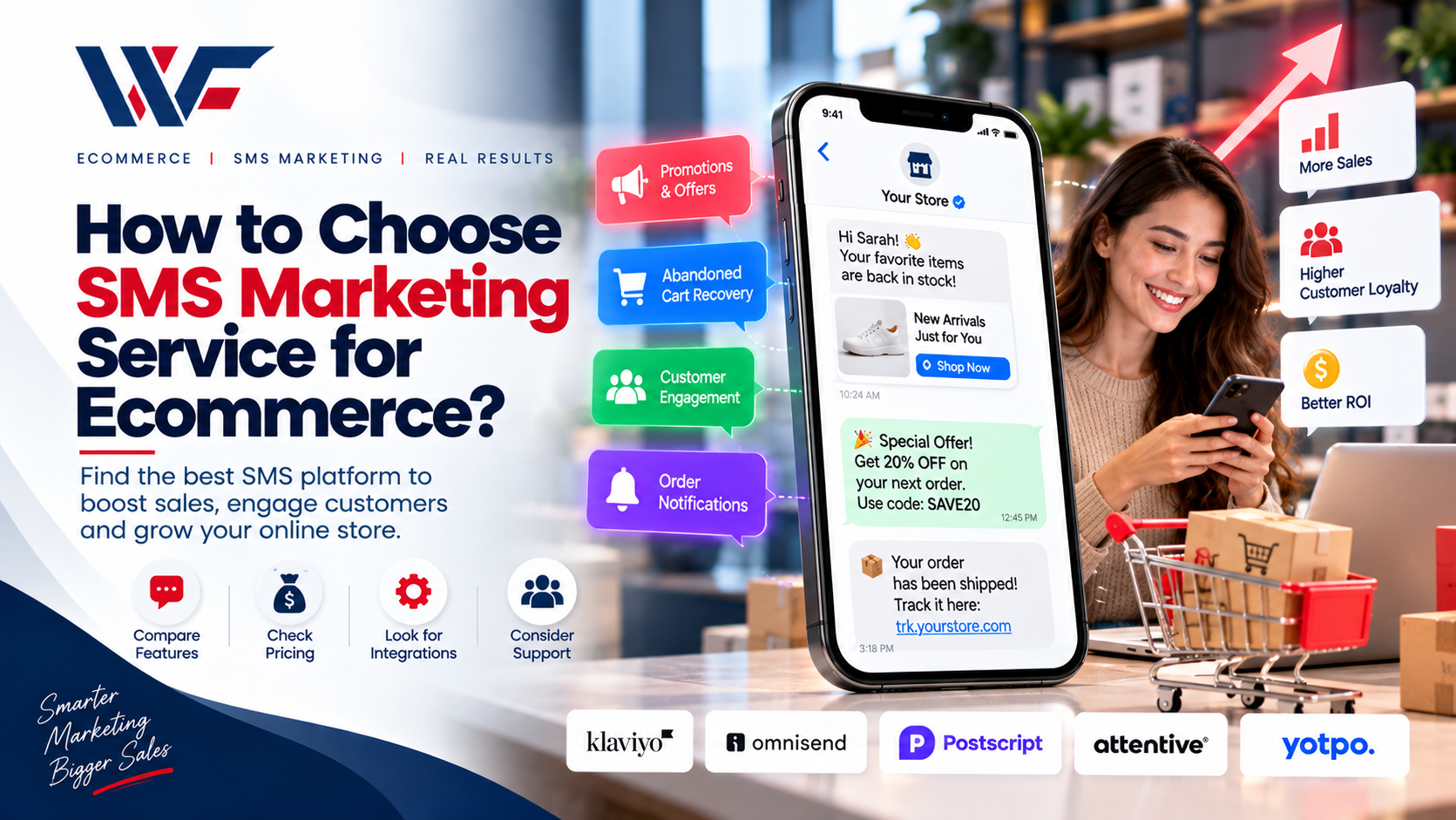
For ecommerce businesses, reaching customers at the right moment can make a major difference in sales and customer retention. Email marketing, social media, paid ads, and content all have an important role, but SMS marketing gives brands a direct way to communicate with customers on their mobile devices.
From promoting limited-time offers to recovering abandoned carts, SMS can support customers throughout the buying journey. However, with so many providers available, choosing the right platform can be difficult.
So, how to choose an SMS marketing service for ecommerce? Start by looking beyond pricing. The right service should offer reliable delivery, ecommerce integrations, automation, customer segmentation, personalization, analytics, and the features your business needs to grow.
What Is an Ecommerce SMS Marketing Service?
An ecommerce SMS marketing service is a platform that allows online stores to send promotional, transactional, and automated text messages to customers who have provided the appropriate consent.
Common ecommerce SMS campaigns include:
- Promotional offers and discount codes
- Flash sale announcements
- New product launches
- Abandoned cart reminders
- Back-in-stock alerts
- Order and shipping notifications
- Post-purchase messages
- Customer win-back campaigns
- Exclusive offers for loyal customers
Instead of sending every message manually, an SMS platform can automate communication based on customer actions, preferences, and purchase behavior.
How to Choose SMS Marketing Service for Ecommerce
Choosing an SMS provider becomes easier when you know which features actually matter to an online store.
1. Check Ecommerce Integrations
Your SMS platform should work smoothly with the technology your store already uses.
Look for integrations with platforms such as Shopify, WooCommerce, BigCommerce, Magento, CRMs, and other marketing tools. A strong integration allows customer data and shopping activity to trigger relevant SMS campaigns.
For example, when someone adds a product to their cart but doesn’t complete checkout, an automated abandoned cart message can be triggered without manual intervention.
2. Look for SMS Automation
Automation is one of the most valuable features for ecommerce marketing.
A good platform should allow you to build workflows for:
- Welcome messages
- Abandoned cart recovery
- Post-purchase follow-ups
- Shipping updates
- Back-in-stock notifications
- Customer win-back campaigns
- Birthday or special-event offers
- Repeat-purchase reminders
Once these workflows are configured, they can communicate with customers based on specific events or behaviors.
3. Consider Segmentation and Personalization
Sending the same promotion to every subscriber isn’t always the best approach.
Choose an SMS marketing service that lets you create customer segments based on factors such as:
- Purchase history
- Product interests
- Location
- Customer value
- Browsing behavior
- First-time or repeat purchases
- Engagement with previous campaigns
Personalization can then make each campaign more relevant. For example, a skincare store could promote a new moisturizer to customers who previously purchased skincare products instead of sending the promotion to its entire database.
4. Evaluate Bulk SMS Features
If you’re planning promotional campaigns, you may be wondering, what’s the best bulk SMS marketing service for ecommerce promos?
There isn’t one universal answer because the right provider depends on your store, audience, location, budget, and marketing goals.
Instead, compare providers based on:
- Message delivery reliability
- Contact management
- Campaign scheduling
- Audience segmentation
- Personalization
- Link tracking
- Analytics
- Automation capabilities
- Pricing
- Compliance features
Bulk SMS is particularly useful for flash sales, seasonal promotions, product launches, and special offers. However, sending messages to a large audience doesn’t mean every subscriber should receive the same message.
Bulk SMS vs. Automated SMS
|
Bulk SMS |
Automated SMS |
|
Useful for large promotional campaigns |
Useful for individual customer journeys |
|
Ideal for flash sales and announcements |
Ideal for abandoned cart reminders |
|
Sent to selected customer segments |
Triggered by customer actions |
|
Requires campaign planning |
Runs automatically after setup |
|
Useful for product launches |
Useful for post-purchase communication |
A strong ecommerce SMS strategy can use both approaches. Bulk campaigns can create awareness, while automated messages can support customers throughout the buying journey.
5. Check Deliverability and Compliance
A provider’s ability to deliver messages reliably is essential. At the same time, ecommerce brands need to manage customer consent and applicable SMS marketing requirements.
Before choosing a platform, check whether it provides tools for:
- Subscriber opt-ins
- Consent management
- Easy opt-outs
- Contact list management
- Sender registration where required
- Delivery monitoring
SMS regulations vary by country and region, so businesses should understand the requirements that apply to their target customers before sending promotional messages.
6. Compare Pricing and ROI
Price shouldn’t be the only factor when comparing SMS marketing platforms.
Look at the complete cost, including:
- Cost per SMS
- Monthly subscription fees
- Subscriber limits
- International messaging charges
- Automation costs
- Additional platform fees
Then consider the potential return. Useful ecommerce metrics include conversion rate, revenue per campaign, abandoned cart recovery, repeat purchases, click-through rate, and customer engagement.
A platform that costs slightly more but provides better automation and revenue tracking may offer greater value than a cheaper service with limited functionality.
7. Review Analytics and Reporting
Your SMS marketing platform should help you understand which campaigns generate results.
Important metrics include:
- Delivery rate
- Click-through rate
- Conversion rate
- Unsubscribe rate
- Revenue generated
- Revenue from automated workflows
- Abandoned cart recovery
- Customer engagement
These insights allow ecommerce marketers to improve message timing, offers, audience segments, and campaign frequency.
Why SMS Matters in Ecommerce Digital Marketing
SMS works particularly well when it is part of a broader ecommerce digital marketing strategy.
For example, an ecommerce brand might use social media to attract new visitors, paid advertising to generate product awareness, email marketing to educate subscribers, and SMS to deliver time-sensitive offers or reminders.
This creates a connected customer journey instead of treating every marketing channel separately.
SMS can also support customer retention by keeping previous buyers engaged with relevant products, exclusive offers, replenishment reminders, and loyalty campaigns.
Quick Checklist Before Choosing an SMS Provider
Before signing up, make sure the platform offers:
- Ecommerce platform integration
- Bulk SMS capabilities
- Automated workflows
- Customer segmentation
- Personalization
- Abandoned cart recovery
- Campaign scheduling
- Analytics and reporting
- Revenue tracking
- Consent and opt-out management
- Scalable pricing
- Reliable customer support
Frequently Asked Questions
What is the best SMS marketing service for ecommerce?
The right SMS marketing service depends on your ecommerce platform, subscriber volume, target market, budget, automation requirements, and marketing goals. Instead of choosing solely by price, compare integrations, automation, segmentation, deliverability, analytics, and compliance features.
Is bulk SMS good for ecommerce promotions?
Yes. Bulk SMS can be useful for flash sales, seasonal promotions, product launches, discount codes, and other time sensitive campaigns. Using customer segmentation can make these campaigns more relevant.
Can SMS marketing recover abandoned carts?
Yes. Ecommerce SMS platforms can use automated workflows to send reminders when customers leave products in their shopping carts, provided the business has the appropriate consent and follows applicable requirements.
How often should ecommerce stores send SMS?
There is no universal frequency. Businesses should avoid excessive messaging and monitor engagement and unsubscribe rates. Campaign frequency should also match customer expectations and applicable regulations.
